Splitting rent in a shared house means dividing the total weekly or monthly rent among housemates in a way that everyone agrees is fair. The split can be equal, room-based, or formula-driven — and the right method depends on the house, the rooms, and the people living in it.
Getting the split right from the start prevents money disputes and keeps the living arrangement healthy. Savings expert Kylie Travers recommends setting ground rules before anyone moves in and putting everything in writing — who pays what, what percentage, and when. That way, when the bills arrive, there’s no awkward conversation.
For students who want to avoid the complexity of negotiating rent splits altogether, cheap student accommodation melbourne offers all-inclusive pricing where utilities, internet, and amenities are bundled into one weekly fee.
This guide covers how to split rent by room size and features, how to handle bills and groceries, which tools make tracking payments easier, and what to do when situations change.
What Is the Fairest Way to Split Rent?
The fairest way to split rent is by room value — factoring in bedroom size, ensuite access, built-in robes, balconies, and parking spaces. Equal splits work well when rooms are genuinely comparable. Room-based pricing works better when rooms differ significantly in size or features.
Why Splitting Rent Fairly Matters in a Share House
Unfair rent splits are one of the top causes of conflict in share homes. When one housemate pays the same amount for a master bedroom with an ensuite as another pays for a small room with a shared bathroom, resentment builds quickly.
Travers puts it plainly: setting ground rules before moving in — and writing them down — is what separates a functional share house from a stressful one. A written agreement means there’s no “he said, she said” when payment time comes.
Fair splits also protect housemates financially. If someone is overpaying relative to what they’re getting, the living arrangement becomes unsustainable. Getting it right at the start saves everyone money and conflict later.
How to Decide How Much Rent Each Person Pays
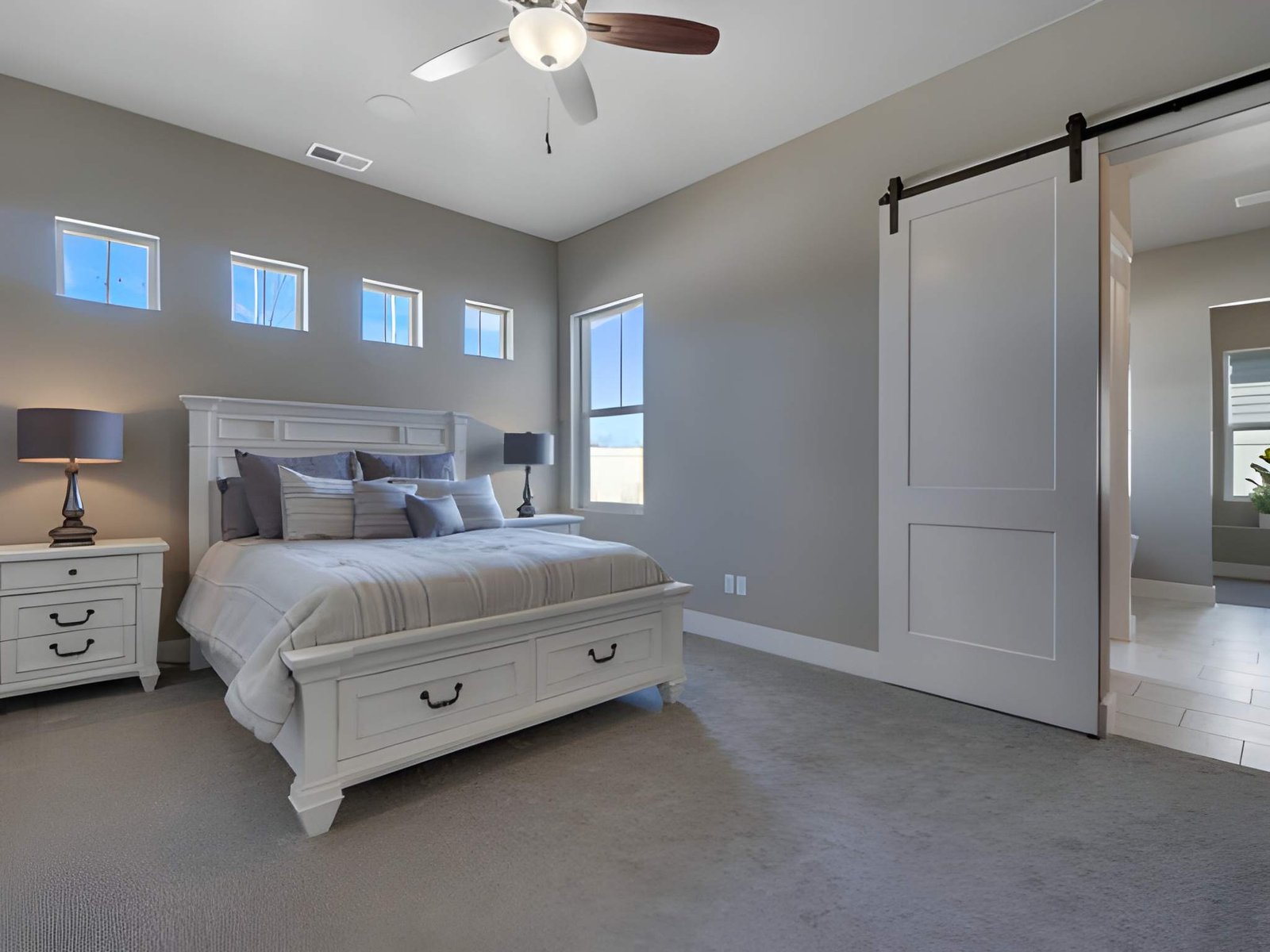
To decide how much rent each person pays, assess each bedroom individually based on size, features, and access to extras like parking or a bathroom. The total of all individual room rents should equal the total weekly rent.
Splitting Rent Equally Between Housemates
Equal splitting works when every bedroom in the share house is similar in size and features — same square metre (m²) floor area, same bathroom access, no extras like a garage or balcony attached to one room. In a 3-bedroom share house where all rooms are nearly identical, dividing the rent by 3 is the simplest and most defensible approach.
Splitting Rent by Room Size
To split rent by room size, measure each bedroom in square metres and calculate each housemate’s share as a percentage of total bedroom floor space. For example, in a house with total bedroom space of 60 m²:
- Room A: 25 m² = 41.7% of rent
- Room B: 20 m² = 33.3% of rent
- Room C: 15 m² = 25% of rent
This method is data-driven and hard to argue with. It does not account for extra features like ensuites or walk-in robes, so combine it with a feature-based adjustment for more accuracy.
Splitting Rent Based on Bedroom Features
Bedroom features add real value and should be priced accordingly. A master bedroom with an ensuite and walk-in wardrobe is worth more than a standard room with access to a shared bathroom. As Travers notes, “Everywhere I have rented out rooms, the larger room was more, even if only by $10” — and a master bedroom with ensuite can add AUD $50 or more per week in value.
Features that justify higher room rent include:
- Ensuite bathroom (private bathroom attached to the bedroom)
- Walk-in wardrobe or built-in robe
- Balcony or private outdoor space
- Dedicated parking space or garage spot
- Air-conditioning unit in the bedroom
- Larger floor area
Assigning Value to Each Room
Have each housemate independently write down what they think each room is worth per week, then compare. If the numbers align, the split is settled. If they don’t, the written figures give everyone a starting point for negotiations. This process removes personal bias from the conversation and grounds the discussion in actual numbers.
Adjusting Rent for Couples
Couples in a share house use the common areas — kitchen, living room, bathrooms — at double the rate of a single occupant. Experts recommend charging couples between 15% and 40% more than the standard single-occupant room rate. For a room priced at AUD $200 per week, a couple would pay between AUD $230 and AUD $280 per week. The exact percentage depends on how much common space is available and how frequently those areas are used.
Factoring in Shared Spaces vs Private Space
Private spaces (bedrooms, ensuites, private balconies) are priced individually. Shared spaces — the kitchen, living room, laundry, and common bathrooms — are factored into the overall rent already. The ratio of private space to shared space matters: a housemate with a larger bedroom but limited access to common areas is in a different position from a housemate with a small bedroom but access to a large shared living area and backyard.
How to Split Bills Between Housemates

To split bills between housemates, start with an equal split for fixed costs and negotiate usage-based splits for variable costs where one person’s consumption is clearly higher than others.
Equal Bill Splitting vs Usage-Based Splitting
Equal bill splitting works for fixed costs like the internet, where usage doesn’t vary much from person to person. Usage-based splitting works for electricity and gas, where one housemate running air-conditioning overnight or taking long hot showers adds measurable cost to the bill.
The challenge with usage-based splitting is tracking. Without smart meters or sub-metering, it’s difficult to attribute exact usage to individuals. Most share houses default to equal splitting with an agreed process for flagging unusually high usage.
Electricity, Gas and Water Costs
Electricity and gas are the bills most likely to cause disputes in a share house. Before moving in together, discuss each housemate’s habits — whether anyone works from home full-time, uses air-conditioning constantly, or has high-power appliances like gaming setups or electric heaters.
As Travers notes, “I lived with someone who wanted the air-conditioning on overnight. They paid the extra for that convenience.” That’s the right approach: if one housemate’s habits drive the bill significantly higher, that housemate covers the difference, with the base bill split equally.
Water costs in most Australian states are billed quarterly and split equally unless one housemate has notably different usage patterns.
Internet and Subscription Services
Fixed internet is straightforward to split equally. As Travers says, “You can get cheap unlimited plans and split the cost. Or each person can have their own portable internet.” The key is deciding before moving in whether the house will share one internet plan or each person will manage their own connection.
Streaming services (Netflix, Stan, Spotify) are typically handled individually, but some share houses pool a subscription under a shared account and split the monthly cost equally.
Handling High Usage Situations
Address high usage directly and early. If one housemate’s electricity consumption is visibly higher — running air-conditioning 24 hours, charging an electric vehicle, working from home with multiple monitors — set a clear agreement upfront. Options include that housemate paying a fixed surcharge on top of their base share, or switching to a usage-based split for that billing period.
How to Split Grocery and Household Costs
Sharing Food Costs Equally
Shared grocery systems work when all housemates eat similarly, have no major dietary restrictions, and spend roughly the same amount on food. Everyone contributes equally to a weekly shop and shares all meals and pantry items.
Individual vs Shared Grocery Systems
Individual grocery systems work better in most share houses, especially where housemates have different diets, schedules, or food budgets. Each person buys their own food and stores it separately. This avoids arguments about who finished the milk or who ate someone else’s leftovers.
A hybrid approach — individual groceries for most items, with a shared kitty for household staples — is the most practical option for most housemates.
Managing a Household Expense Kitty
A household kitty is a shared pool of money used for communal purchases like milk, bread, toilet paper, dishwashing liquid, and cleaning products. Each housemate contributes an equal fixed amount per week — typically AUD $10 to AUD $20 — and the kitty is used exclusively for shared household items.
Keep a running list of what’s purchased from the kitty so all housemates can see where the money goes. Replenish it when it runs low, not when it’s empty.
Common Methods to Split Rent (Compared)
There are 4 main methods to split rent in a shared house, each suited to different situations.
Equal Split Method
Every housemate pays the same amount regardless of room size or features. Best for houses where rooms are genuinely similar. Simple to calculate and easy to agree on. Breaks down quickly when rooms vary significantly.
Room-Based Pricing Method
Each bedroom is assigned a weekly price based on its size and features. The sum of all bedroom prices equals the total rent. Best for houses with a clear master bedroom or rooms of noticeably different sizes. Requires upfront negotiation but produces the fairest outcome long-term.
Percentage or Formula-Based Method
Each housemate’s rent contribution is calculated as a percentage of total rent, derived from their room’s share of total bedroom floor space (m²). Objective and data-driven. Works well in houses where room sizes are measurably different. Does not inherently account for features like ensuites or parking.
Hybrid Split (Shared and Private Space)
Calculate each bedroom’s share of private space using floor area, then add a flat equal contribution for shared spaces (kitchen, living room, laundry). This method gives a more complete picture of value distribution and is recommended by housing experts for houses with significant differences between rooms.
Tools and Apps to Help Split Rent and Bills

Rent Splitting Apps and Calculators
Several apps make splitting rent and bills straightforward, including:
- Splitwise: Tracks shared expenses, calculates who owes whom, and handles uneven splits across multiple people
- Tricount: Similar to Splitwise, with a clean interface suited to share house expense tracking
- BEEM It: Australian payment app that allows instant money transfers between housemates
- Up Bank: Australian neobank with shared bill features and easy transfer tools
Tracking Payments and Avoiding Disputes
Set a shared group on Splitwise or a similar app before anyone moves in. Log every shared expense as it occurs — bills, kitty top-ups, household supplies. Review the balances weekly so no one falls significantly behind. Monthly settlement (one payment to clear all balances) is simpler than paying each expense individually.
How to Set House Rules for Rent and Expenses
Creating a Written Agreement
A written house agreement should cover 5 main points: each person’s weekly rent amount, which bills are shared and how they’re split, the household kitty contribution and what it covers, the payment schedule, and the process for handling disputes. The document doesn’t need to be legally formal — a shared Google Doc that all housemates have signed off on is sufficient.
Setting Payment Schedules
Align rent payment dates with the lease due date and set bill payment dates in advance. Most Australian share houses collect rent weekly or fortnightly. Set a standing reminder in a group chat for payment dates. Housemates who pay via bank transfer should use a consistent reference (e.g., “Rent Week 14 – [Name]”) to make reconciliation easier.
Handling Late Payments
Agree on a late payment process before it becomes an issue. A reasonable approach: a 48-hour grace period, followed by a direct message to the housemate, followed by a group conversation if payment is still outstanding after 5 days. Avoid informal lending between housemates for rent — it creates financial imbalance and personal tension.
What Happens When Situations Change
When a New Housemate Moves In
When a new housemate moves in, recalculate all room rents from scratch based on the new occupancy. Do not simply assign the departing housemate’s old rent to the new person without checking whether the amount still reflects fair market value and room conditions. Update the written house agreement and add the new housemate to shared expense apps.
When a Partner Moves In
When a housemate’s partner moves in permanently or semi-permanently (more than 3 to 4 nights per week), raise the issue directly as a house. The standard approach is to charge the couple 15% to 40% more for their room to account for the increased use of shared spaces. Update the written agreement to reflect the new arrangement.
When Someone Moves Out Early
When a housemate moves out before the lease ends, the remaining housemates bear the cost gap until a replacement is found — unless the departing housemate covers their share for the notice period specified in the lease. Agree on this process in the written house agreement before anyone moves in, so there’s no dispute if it happens.
How Birch Ridge Is Helping Students Skip the Rent Splitting Hassle
One of the reasons rent splitting causes friction is that it requires ongoing negotiation, trust, and organisation — all of which take time and energy that students could spend elsewhere. Birch Ridge’s student accommodation properties are designed to remove that friction entirely.
At Birch Ridge, each student pays a single weekly fee that covers rent, utilities, internet, and building amenities. There are no shared bills to divide, no kitty to manage, and no conversations about who left the air-conditioning on. Students living at melbourne uni student accommodation properties near the University of Melbourne get private, modern rooms with all costs included — making budgeting simple and housemate disputes over money essentially non-existent.
For students who want the social side of share living without the financial administration, Birch Ridge offers a genuinely easier path.
Common Mistakes to Avoid When Splitting Rent

There are 6 common mistakes housemates make when splitting rent:
- Agreeing on a verbal-only arrangement with no written record — verbal agreements are forgotten or misremembered within weeks
- Applying an equal split to rooms that are clearly different in size or features — this creates resentment quickly
- Failing to agree on a process for high electricity usage before it shows up on a bill
- Not adjusting rent when a partner moves in permanently
- Letting bill payments accumulate without tracking — by the time the debt is visible, it’s already large
- Choosing a house without discussing financial habits first — interview potential housemates about usage and spending before committing
Tips for Avoiding Conflict with Housemates
There are 5 practical ways to reduce money-related conflict in a share house:
- Set all financial arrangements in writing before the first rent payment is made
- Use a shared expense app from day one so all housemates can see the same financial picture
- Address payment issues within 48 hours — small delays become big tensions if left unacknowledged
- Revisit the rent split whenever a new housemate joins or a room changes occupancy
- Separate financial conversations from emotional ones — discuss money when everyone is calm, not during a broader argument
FAQs About Splitting Rent in Australia
Should couples pay more rent?
Yes, couples should pay more rent in a share house. Experts recommend charging couples between 15% and 40% more than the standard single-occupant room rate, because two people use the kitchen, living room, bathrooms, and laundry at double the rate of one person.
Is it better to split rent equally or by room?
Split rent by room when bedrooms differ in size, features, or extras like ensuites, parking, or balconies. Split rent equally only when rooms are genuinely comparable. Room-based pricing produces the fairest outcome in most share houses.
How do you split rent if rooms are different sizes?
To split rent when rooms are different sizes, measure each bedroom in square metres, calculate each room’s percentage of total bedroom floor space, and apply that percentage to the total rent. Adjust the percentage upward for rooms with premium features like an ensuite or walk-in wardrobe.
Who pays more for the master bedroom?
The housemate in the master bedroom pays more. A master bedroom with an ensuite and walk-in wardrobe is typically worth AUD $50 or more per week above a standard room, according to savings expert Kylie Travers. If the master bedroom also has a garage spot or balcony, factor those extras in as well.
Final Thoughts: How to Keep Rent Splitting Fair and Stress-Free
Splitting rent fairly in a share house comes down to 3 things: assessing each room honestly, writing the agreement down, and using tools to track payments.
Equal splits work when rooms are the same. Room-based pricing works when they’re not. Couples pay more. High-usage housemates cover the extra cost they generate. Bills are split equally unless usage is clearly unequal. Groceries work best on an individual system with a shared kitty for communal staples.
The housemates who avoid conflict over money are the ones who sort these details out before moving in together — not after the first bill arrives.